Key Takeaways
- IPTV offers immense flexibility and cost savings compared to traditional UK cable providers.
- Sky and Virgin require long-term contracts and expensive hardware; IPTV works on devices you already own.
- IPTV provides a significantly larger channel roster, including global international networks.
- A strong, stable broadband connection is crucial for a flawless IPTV experience.
For decades, the British television landscape has been dominated by a select few giants. If you wanted premium sports, the latest cinematic releases, and reliable live broadcasting, you inevitably found yourself locked into a lengthy, expensive contract with a traditional satellite or cable provider. However, the rise of high-speed fibre broadband has radically altered this dynamic. The debate of IPTV vs Sky UK (and Virgin Media) is now at the forefront of digital entertainment, as millions of households reconsider how they consume media.
Internet Protocol Television is no longer a niche technology; it is a mainstream, viable alternative to the cumbersome satellite dishes and restrictive set-top boxes of the past. But is it genuinely better for the average British viewer? In this detailed comparison, we will examine the critical differences in cost, content, flexibility, and technological infrastructure to help you determine which service truly deserves a place in your living room.
1. The Cost Paradigm: Breaking Free from Contracts
The most glaring difference in the IPTV vs Sky UK debate is pricing architecture. Traditional providers are notorious for their complex, multi-tiered pricing structures. You might be lured in by a promotional introductory offer, only to find your monthly bill skyrocketing after 18 months. Furthermore, to access premium football fixtures or new movie releases, you are forced to add expensive “bolt-ons” to your base package.
Conversely, a premium IPTV service operates on a flat, transparent fee. For a fraction of the cost of a basic cable package, an IPTV subscription grants you unrestricted access to everything: sports, movies, documentaries, and international news. Most importantly, reputable IPTV providers do not enforce long-term contracts. You can purchase a 1-month or 3-month pass from their Subscription Packages, granting you total financial freedom and the ability to cancel at any time without punitive exit fees.
2. Hardware and Installation
Installing Sky or Virgin Media is often a logistical headache. It requires scheduling an engineer visit, drilling holes through your exterior walls, mounting a satellite dish, and running unsightly coaxial cables across your skirting boards. You are then required to rent their proprietary set-top boxes, which sit beneath your television taking up space.
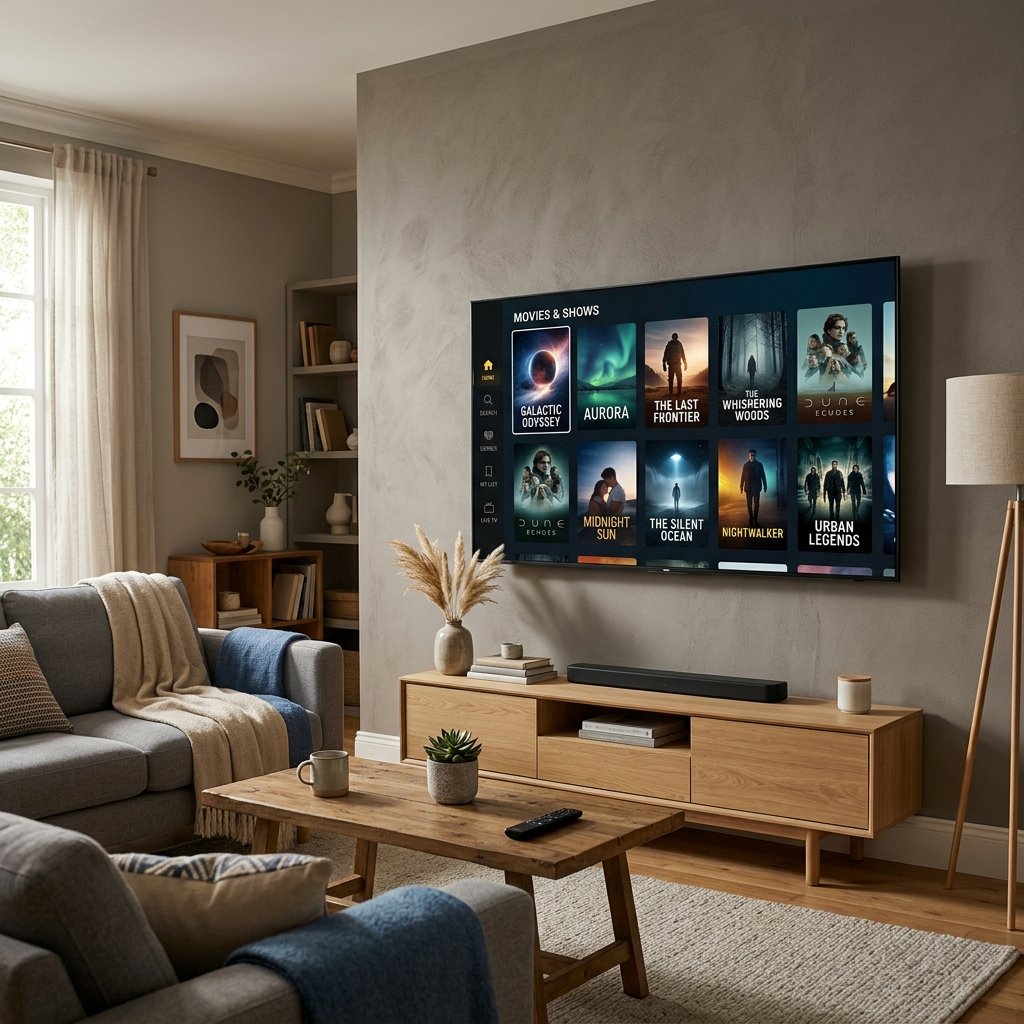
IPTV eliminates this physical clutter entirely. Because the broadcast is delivered securely through your existing broadband router, there is zero professional installation required. You simply download a compatible application onto a device you likely already own—such as an LG Smart TV, an Amazon Firestick, or an Apple TV. Following a brief Setup Guide, you input your digital credentials and begin streaming within minutes. This digital-first approach is cleaner, faster, and far more modern.
3. Content Variety: Local vs Global
While traditional UK providers offer excellent domestic programming, they are inherently limited by their regional licensing agreements. If you wish to watch a niche European sports league or an American news network, it is often impossible to find on a standard Sky EPG.
This is where IPTV truly excels. A high-quality subscription leverages global servers to deliver an unprecedented volume of content. It is not uncommon for a premium service to offer over 50,000 live channels worldwide, alongside a massive Video on Demand (VOD) library containing over 100,000 films and series. Whether you want BBC One in HD or a local broadcast from across the globe, it is all available in one unified interface. This global reach makes IPTV the undisputed winner for expatriates or dedicated sports enthusiasts.
4. The Importance of Broadband Infrastructure
It is important to acknowledge that IPTV does have one absolute prerequisite: a robust internet connection. Traditional satellite TV receives its signal from the sky, making it immune to local broadband outages. IPTV relies entirely on your home network. To stream live 4K sports without buffering, you require a stable connection of at least 30 Mbps.
Fortunately, the UK’s digital infrastructure is rapidly improving. According to the latest data from Wikipedia’s overview of Fiber-optic communication, the rollout of full-fibre gigabit broadband is expanding aggressively across the country. If your home is equipped with a modern fibre connection, the stability of a premium IPTV stream will rival or even exceed that of a traditional satellite feed, particularly during adverse weather conditions which can often disrupt dish signals.
5. Portability and Multi-Room Viewing
If you want to watch Sky in your bedroom, you typically have to pay for an extra “multi-room” box and an additional monthly fee. If you go on holiday, you cannot take your satellite dish with you. IPTV is inherently portable. Because your subscription is tied to a digital login rather than a physical location, you can install the app on your smartphone or tablet. As long as you have a stable Wi-Fi or 5G connection, you can watch your premium UK channels from a hotel room, a train, or a café.
Final Verdict
When comparing IPTV vs Sky UK, the conclusion is increasingly clear for the modern consumer. While traditional providers still hold a monopoly on absolute plug-and-play simplicity for those without internet access, IPTV is vastly superior in terms of cost-efficiency, content volume, and hardware flexibility. If you possess a stable broadband connection, transitioning to a premium digital streaming service is a logical, forward-thinking upgrade that will drastically enhance your home entertainment experience while simultaneously reducing your monthly outgoings.